
Play Snakes and Ladders Online vs AI
How to Play Snakes and Ladders
Each player gets one token and races in from off the board to square 100. Hit a ladder and you climb. Land on a snake's head and you slide down. You must finish on an exact 100. Pick an AI level and a side, then start playing.
What Snakes and Ladders Is
Snakes and Ladders is a racing game that spread from South Asia. The board is 10×10, and the squares are numbered in back-and-forth rows: 1 to 10 across the bottom, then 11 to 20 back the other way, folding all the way up to 100 in the top-left corner.
Each side has one token. Black rolls a six-sided die first. Your token moves that many squares; if the roll would carry you past 100, you do not move. Land on the foot of a ladder and you climb to the top. Land on a snake's head and you slide to its tail. The first player to land exactly on 100 wins.
This site uses the public-domain game, not the Hasbro title Chutes and Ladders. The rules page covers the details. If you just want to get a feel for the race, start with the AI game above.
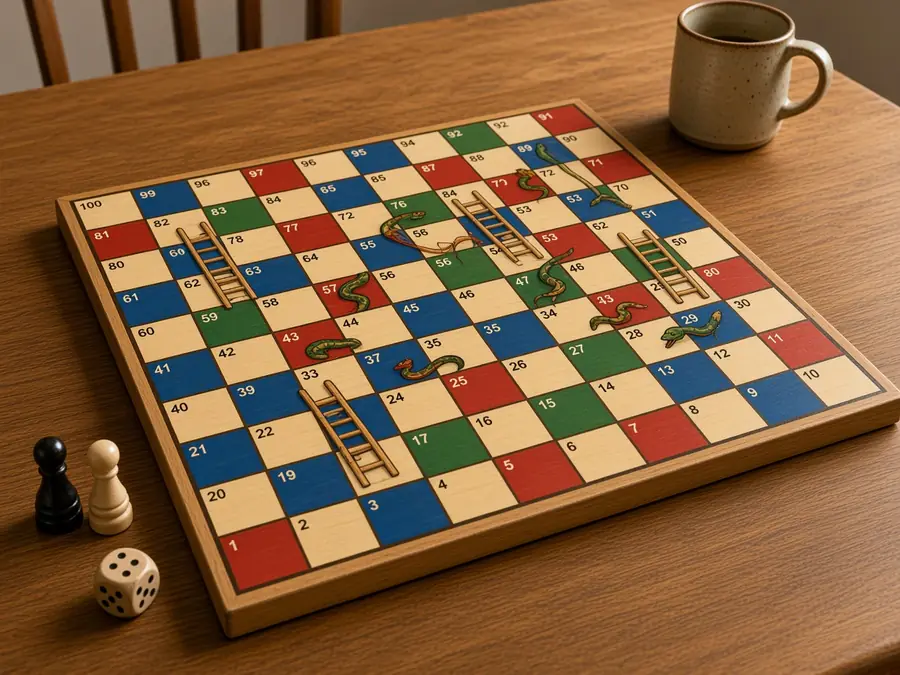
One Hundred Squares, Folding Up
Do not count every row in the same direction. This board folds back and forth: after 10 you move up a row and count the other way. Your first roll brings the token onto the board. Snakes and ladders resolve on the square where you stop.
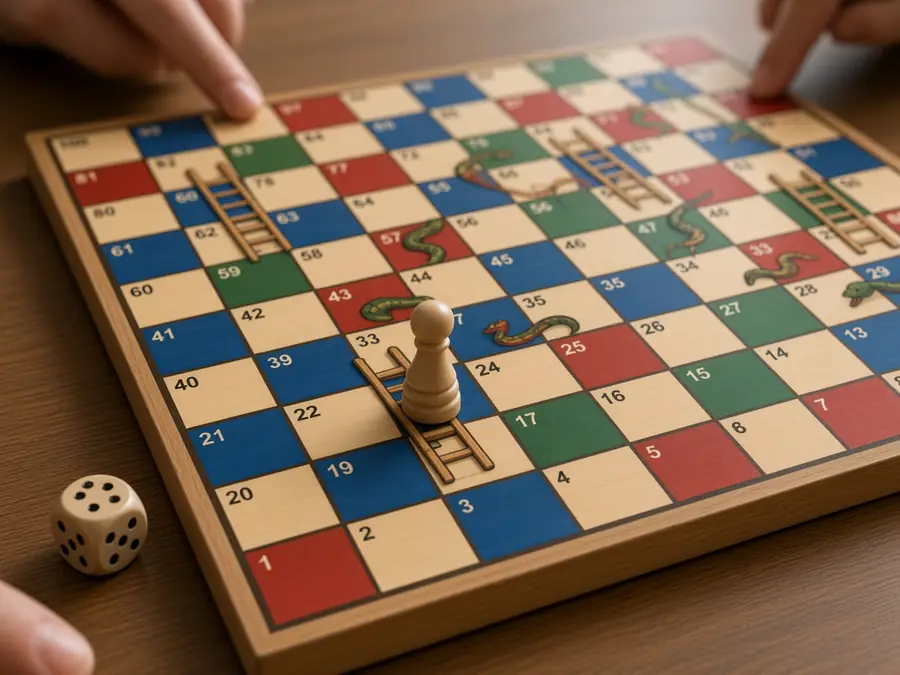
Ladders Lift, Snakes Drop
Stop on the foot of a ladder and you climb to its top. Stop on a snake's head and you slide to its tail. Each turn resolves only one snake or ladder. Square 100 must be hit exactly; if the roll is too large, the turn ends with no move.
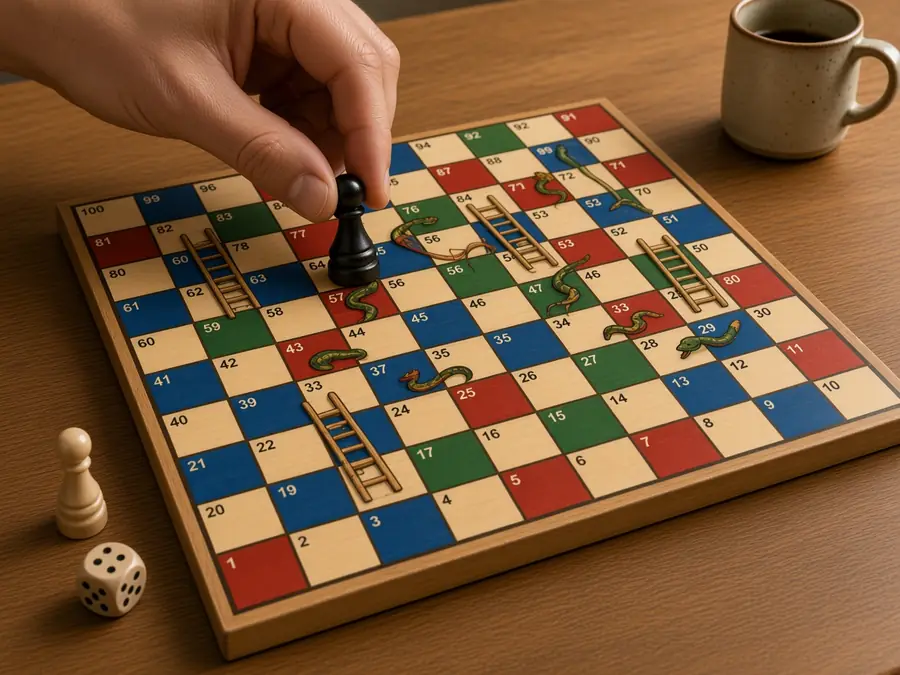
Hints, Undo, and Replay
If you want to get a feel for the pace of Snakes and Ladders, you do not have to focus on winning right away. Hints help you confirm the landing spot, undo rolls back the last turn, and replay lets you review exactly when a ladder helped or a snake changed the race. All calculation stays in your browser.
10×10race board
1token a side
1d6each turn
100exact finish
Common questions
Which version of Snakes and Ladders does this board use?
This is the classic public-domain game on a 10×10 folding track: one token a side, entering from off the board onto square 1. Each turn you roll one six-sided die. Rolling a 6 does not give you another roll. There is no capturing and no swapping. Stop on the foot of a ladder and you climb to the top. Stop on a snake's head and you slide to its tail. You must land exactly on 100 to win. The ladders and snakes match the rules page. This is not Hasbro's Chutes and Ladders.
How is this AI different from a typical web Snakes and Ladders game?
The AI reply runs in a dedicated browser Worker, so the whole position is not sent to a remote server while you wait to click again. The sidebar offers multiple AI levels, and the pacing changes with the level you pick. Hints follow that same level; they are not a stronger engine hiding behind the button. After you roll and before the token moves, a hint shows which square you will land on, including any ladder or snake on that stop.
Why is square 11 above 10 when I feel like I should keep counting to the right?
The numbers fold back and forth. The bottom row runs left to right from 1 to 10. The next row counts right to left, so 11 sits directly above 10 and 12 is to its left. Your token follows that path, not one direction on every row. Your first roll brings the token onto the board. After that, each die moves you along the numbers, and snakes or ladders resolve on the square where you stop.
Why does my token stay put when the roll would go past 100?
You need an exact finish. If the die would carry you beyond 100, you do not move on that turn and play passes to the other player. One square short means you must wait for a 1; you cannot move forward and step back. The board will tell you that an exact roll to 100 is required, which matches the rules page.
How should I use hints, undo, and replay without just copying the answer?
Look at where this roll would land and whether a ladder or snake is waiting there, then open the hint and compare. Hints appear only in AI play, after you have rolled and before the token moves. In AI mode, undo steps back through your last turn and the AI reply that followed, so you can try another line. On one shared device, undo goes back one turn at a time. Replay is for after the game, to see which climb or slide changed the race, not for changing a die roll during the other player's turn.
Can I play without an account or an app?
Yes. Open the page on a phone or computer and roll. There is no account, email, or password. Adding the site to your home screen is optional, and a full game works without installing anything.
Can I choose to play Black or White?
Against the AI, yes. As Black you roll first. As White the AI rolls first. Switching color mid-game starts a new game, and the token does not stay halfway up the board. In an online room you pick your side when you create or join, and you can switch before play starts. Two players on one device do not choose colors: Black rolls first, and you take turns.
If I close the page or clear browser data, is this game still there?
Games against the AI and games on one shared device stay in this browser, with a separate saved game for Black and for White. Refreshing or leaving briefly usually lets you continue. Clearing this site's data usually removes those games. Online rooms live on the server; reconnecting means opening the same link in the same browser, not logging into an account.
If I invite a friend online, can I use hints and undo the way I can here?
No. Once a roll is made in an online room, it is synced to the other player. There is no hint and no undo after that. Either player can offer a draw, and it counts only if the other accepts. You can resign, or the host can close the room and end the link. If the connection drops, opening the page again in the same browser usually brings you back to the same seat.
How is two players on one device different from playing the AI?
Two people share one device and take turns face to face. You do not need a network connection, and neither side gets a hint. Undo goes back one turn at a time, which is useful when you want to talk through whether a roll would overshoot 100. Replay is still for after the game. Black rolls first each game; swapping who starts is fairer over two games in a row. The rules are still public-domain Snakes and Ladders: one die each turn, and exactly 100 wins.